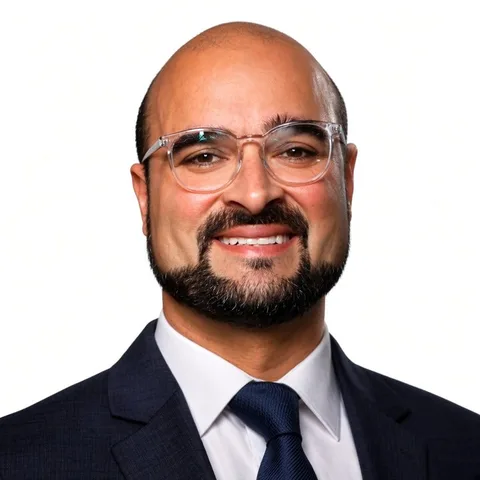
Salim Afshar began in engineering and design in the 1990s, writing software in C++, Java, and PHP, and made his first venture pitch at MIT in 2000. Medical training followed in the 2000s: a D.M.D. and an M.D., and surgical training that led to practice at Boston Children’s Hospital, where he cared for patients with rare conditions and vascular anomalies. He is a Fellow of the American College of Surgeons. Over the course of that clinical work he treated thousands of patients.
He constantly sought to solve challenges, from inventing devices to starting new ventures. That work sat next to academic appointments, and the academic focus turned toward applied technology in rare disease and global health — not as devices dropped into a setting, but as questions of how a system actually delivers. With the Program in Global Surgery and Social Change he contributed to national surgical planning, including support for Zambia’s first National Surgical, Obstetric, and Anesthesia Plan, the NSOAP framework used by ministries of health to decide what sovereignty over their own surgical systems requires.
In India and Rwanda, between 2016 and 2019, he founded Surgathons: themed hackathons that brought local students and faculty into the work of naming surgical-care problems and ideating with the resources at hand. Six events engaged more than fifteen hundred multidisciplinary students. The model — global surgery, innovation, and ethics held together — was published in BMJ Global Health in 2020.
He then sought out Professor Rifat Atun, who became a mentor. He later worked within a university health systems innovation lab, and became its AI Translation Lead. The lab's course in health-systems innovation is the origin of the current AI for Health Systems hackathon: Atun's work, and his credit.
In 2020 he retired from clinical practice and turned toward a gap he could no longer treat as incidental: technology was growing exponentially, and access to it was widening, while organizations still could not translate it into their own conditions. The mission that followed was to accompany systems, communities, and young ventures in bending the arc of innovation toward human flourishing for all. To do that work he had first to understand the stakeholders, and to build the skills, knowledge, and judgment the next stage would require. He invested with W Health Ventures, founded Reveal HealthTech as a data and AI engineering company serving health systems, medtech, life sciences, and government programs, and scaled a global team of engineers, designers, and clinicians. In 2023 Reveal joined CancerX, a public-private partnership announced under the Cancer Moonshot, as a founding member and a champion of the CancerX Accelerator. His experience and notes from that work have been captured in The AI Translation Briefing .